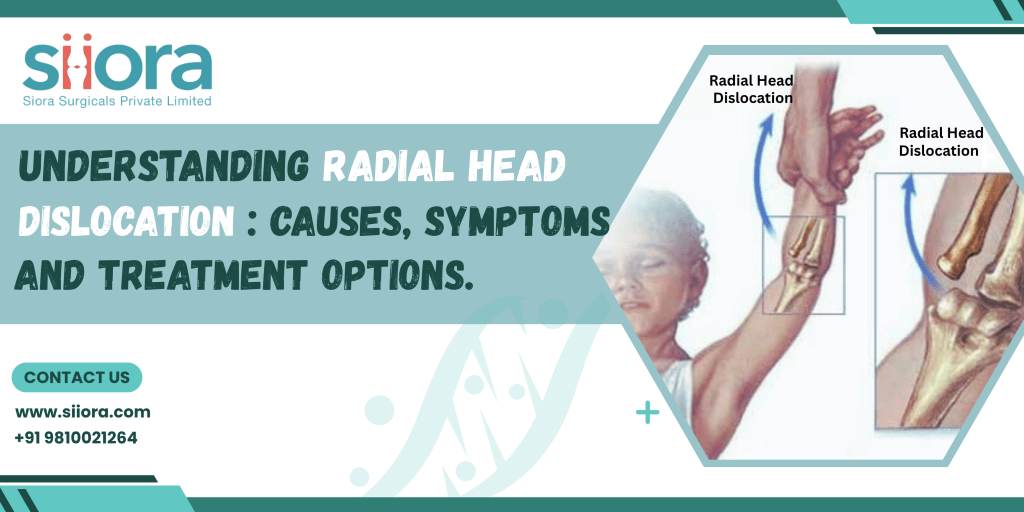
Radial head dislocation is a relatively uncommon but significant injury that affects the elbow joint, often seen in children but also occurring in adults due to trauma or underlying conditions. Understanding its causes, recognizing the symptoms, and knowing the available treatment options is essential for early diagnosis and effective management.
What is Radial Head Dislocation?
The elbow joint is a complex structure involving three bones: the humerus (upper arm), the radius, and the ulna (forearm bones). The radial head is the top part of the radius that connects with the humerus and enables forearm rotation. A dislocation occurs when the radial head slips out of its normal position at the elbow joint.
In children, especially those under five years old, the condition is commonly referred to as nursemaid’s elbow or pulled elbow. In adults, radial head dislocations are usually more serious and often part of a more complex injury involving fractures or ligament damage.
What Are the Causes of Radial Head Dislocation?
The underlying causes of radial head dislocation vary by age group:
In Children
Most cases occur due to a sudden pull on the extended arm, such as when a child is lifted or swung by the hands or arms. This sudden traction can cause the annular ligament (which holds the radial head in place) to slip, allowing the radial head to dislocate.
In Adults
Radial head dislocations in adults are typically the result of:
Trauma: A direct fall on an outstretched hand or a blow to the elbow.
Monteggia fracture-dislocation: A specific injury where a fracture of the ulna is accompanied by dislocation of the radial head.
Congenital Conditions: Some people may be born with joint abnormalities that make them more prone to dislocations.
Recurrent Dislocations: Repeated trauma or weak ligaments may cause chronic instability.
What Are the Symptoms of Radial Head Dislocation?
Symptoms of radial head dislocation can differ depending on the severity of the injury and the age of the patient. Common signs include:
- Pain in the elbow or forearm
- Limited or painful arm movement, especially rotation (e.g., turning the palm up or down)
- Swelling around the elbow
- Visible deformity or unusual arm position
- In children, refusal to use the affected arm or holding it close to the body in a flexed position
Prompt medical attention is crucial as untreated dislocations can lead to long-term complications such as limited motion, chronic pain, or joint instability.
What is the Diagnosis for Radial Head Dislocation?
A clinical examination is often sufficient to diagnose nursemaid’s elbow in young children. For adults or complex cases, imaging studies like X-rays, MRI, or CT scans may be required to assess the dislocation and identify any associated fractures or soft tissue injuries.
What Treatment Options Are Available for Radial Head Dislocation?
Treatment varies based on the age of the patient and the complexity of the dislocation.
For Children
- Closed Reduction: A quick and gentle manipulation performed by a healthcare provider to pop the radial head back into place. Most children feel immediate relief and regain full movement soon after.
- Observation: After a successful reduction, no further treatment is usually needed, though recurrence can occur.
For Adults
- Closed Reduction with Immobilization: If no fracture is present, the dislocated radial head is manually repositioned, followed by immobilization using a splint or sling.
- Surgical Intervention: Surgery may be necessary in cases involving fractures, ligament tears, or failed closed reduction. Procedures may include internal fixation using trauma implants, ligament repair, or reconstruction.
- Rehabilitation: Physical therapy is crucial for restoring strength, range of motion, and preventing stiffness, especially in adults recovering from surgery.
Final Thoughts
Radial head dislocation, though more common in young children, can affect people of all ages. Understanding its causes and symptoms allows for early intervention and better outcomes. With prompt and appropriate treatment, ranging from simple reduction techniques to surgery, most individuals can recover fully and regain normal function of the elbow. If you suspect a dislocation, especially following trauma or unusual arm movement, seeking medical evaluation is the best step toward a swift and complete recovery.
 Siora Surgicals. Pvt. Ltd.